Maybe you’ve checked into a hotel and had the most irritating stay of your life—scratchy bed linens, dreary lighting—and thought: “I could design a guest room so much better than this.” Some DLN Members are not only taking that step, but opening their very own properties as hoteliers on the side of their very booming design industry careers.
“I had no intention of ever owning a hotel,” says San Francisco Member Jay Jeffers. But when he first saw the circa 1880 estate in Healdsburg, California that would become his baby—The Madrona Hotel—during Memorial Day weekend of 2020, he fell hard. “It is truly a magical place—there's an energy there that you can't describe until you go there,” Jay recalls. “I had this vision of Oscar Wilde having dinner parties there and being decadent.” For John McPhee, the CEO of DLN Partner Chilewich, who (with his wife and son) cofounded The Kent Collection, a 17-room retreat in Kent, Connecticut, one muse was the town itself. About two hours north of New York City, it’s set betwixt three private boarding schools and its sister town, Washington Depot, famously inspired Gilmore Girls. “It’s really the gateway to New England,” says John, who has had a second home in Kent for years. “We get a lot of prep school parents from literally all over the world and they had no place to stay before that wasn't a 20 minute drive, so they're thrilled to have this in town.”
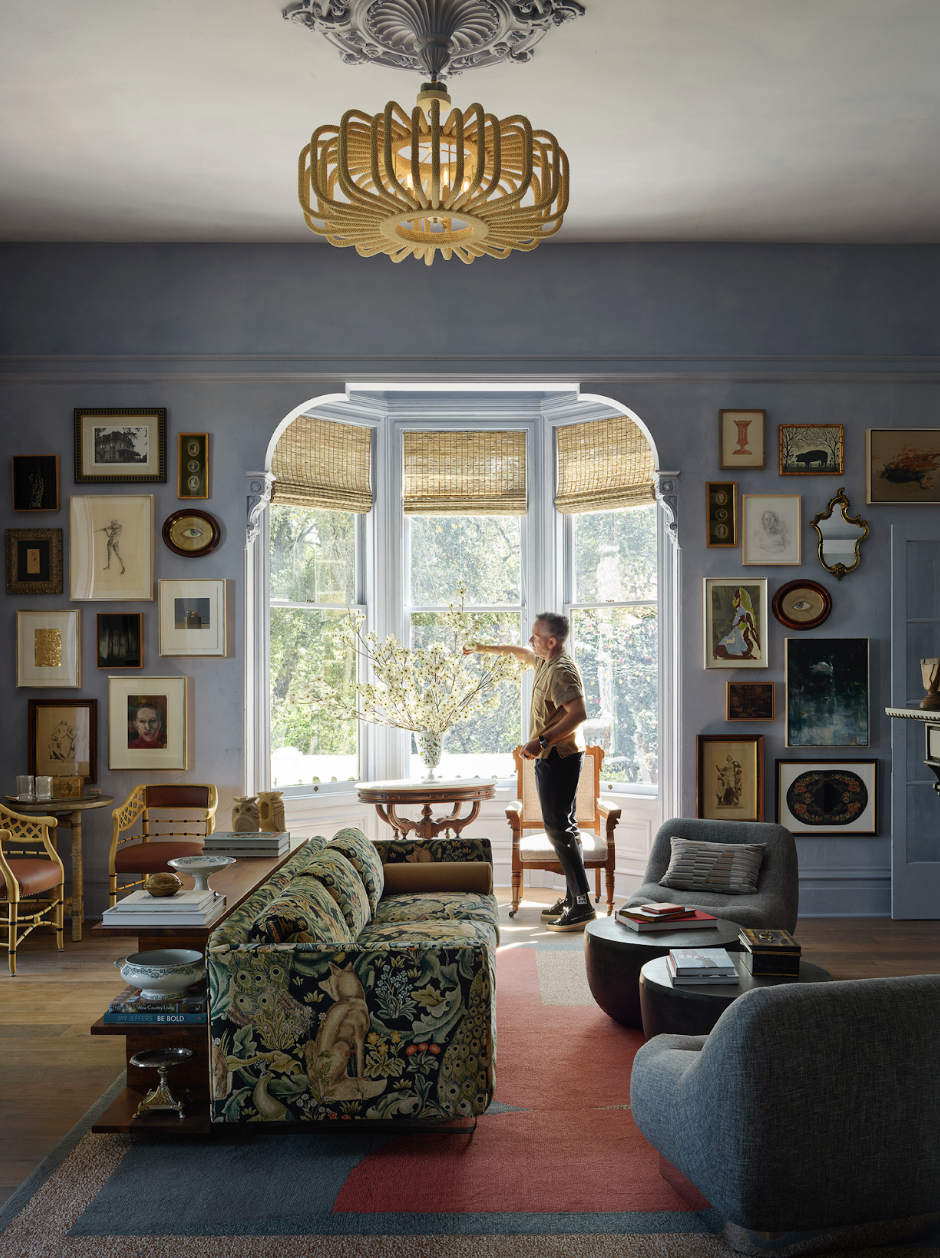
Each hotel is essentially a brick and mortar love letter to its location and backstory—real or imagined. After purchasing The Madrona, Jay leaned in hard to his imagined Oscar Wilde-on-Vacay aesthetic. “I was very lucky in that when we purchased the hotel, we cataloged about 750 pieces of furniture and artwork and things like that,” he says of the estate’s long-established cache of curiosities. “We ended up using about 300 of those pieces again, and some of them were from the original, carved wooden pieces that the Paxton family that built the estate had in their homes. I know that Mr. Paxton would travel by boat and did a lot of business in London, so I kind of imagined that he bought some of these pieces in the U.K. and brought them back.”
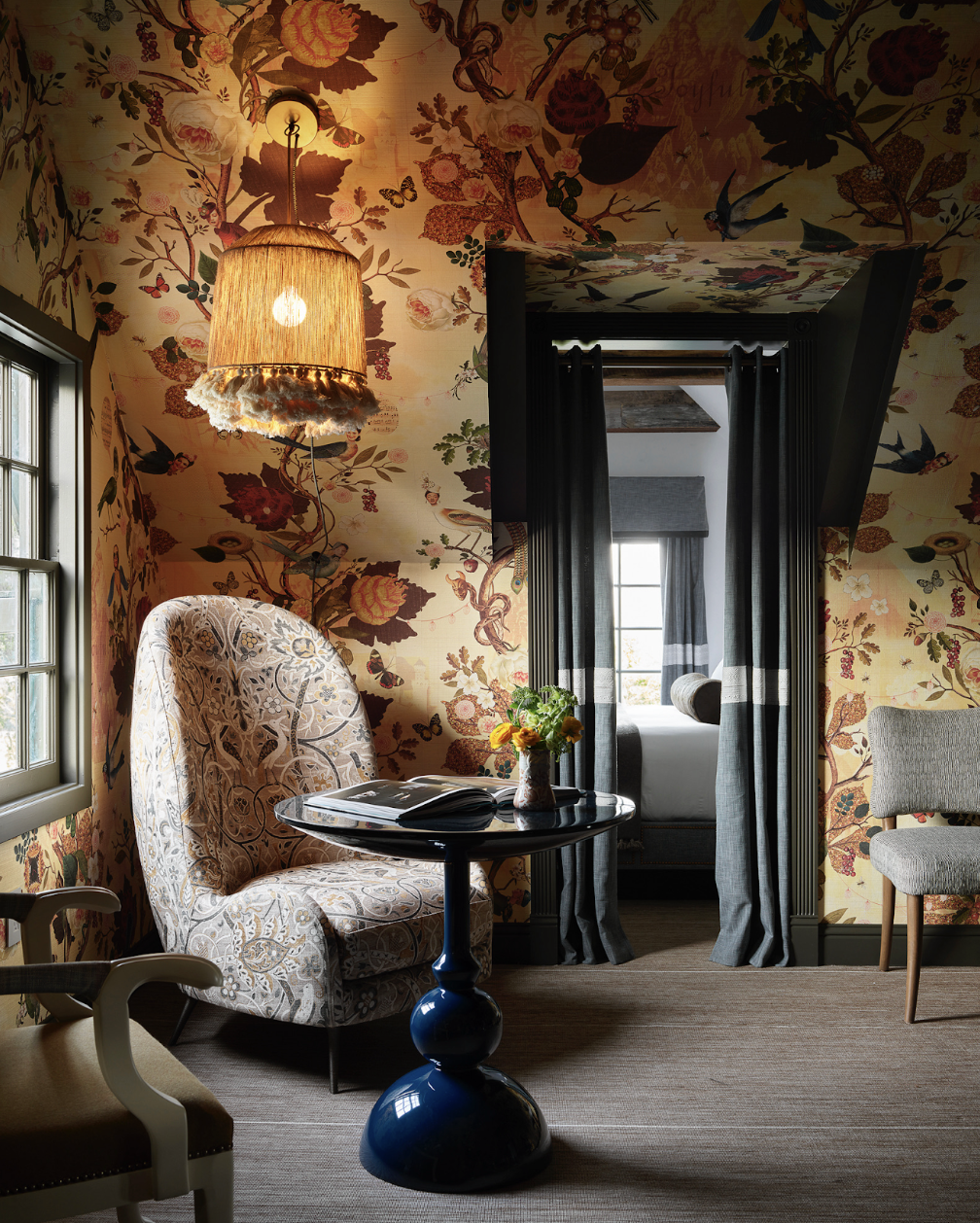
John, the former President of Design Within Reach, called on friends in the design industry to bring their own vision to life at The Kent Collection. “It was a little different approach than you would take if you were a chain hotel that needed 200 rooms to look the same,” he says. “We wanted the rooms to have individuality and personality, so we were perfectly fine getting one-offs or samples or prototypes,” he says. And it worked. “I think people are really surprised when they come out of New York City with how sophisticated these properties are in a town of 3,000 people.”
That’s not to say that both owners didn’t have to bring their hotels up to current standards for discerning guests. “There were huge windows that had been covered with lacy draperies and silk and that sort of thing when it was done by the previous owners, and it had its moment as grandma's cottage,” recalls Jay. “I wanted it to be more ‘today,’ but referencing the past.”
And with any commercial space, a hard-wearing sturdiness is key. “We definitely used a lot more hospitality-grade fabrics, and outdoor fabric, so that they could withstand wear and tear a little bit more,” Jay says. He looked to Andrew Balazs’s Chiltern Firehouse in Marylebone, London, and JK Place Florence for inspiration. “They've been redone, but there are some antiques in the room…there are finishes that, if a table gets scratched, you don't really notice it or it's not the end of the world. At The Chiltern, the bar, the entryway, and the reception area is all carpeted, wall to wall in a very heavy floral, leafy pattern. And I thought to myself, it's unusual for that to be a hotel in London, but it probably shows no stains.” He opted for something most major hotel brands don’t for the walls: lime paint. “It's very forgiving. It already has kind of a movement to it, so it's easy to touch up. And again, if it does kind of scratch or if the walls aren't perfectly straight and all that kind of stuff, it kind of goes with the flow.” John, unsurprisingly, employed Chilewich wallcovering in many spaces. “It's class three wall protection. So it really, you can run into it with a suitcase and it bounces right back.”
This story is from Issue 4 of The Quarterly. Click here to see the full issue.