What the experience shows about teamwork, inspiration, and design education.

Last September, I received a surprise invitation from Laurent Scordino-Mazanec, the director of the École Boulle in Paris, to tour their famous school. He had recently been to New York City and had seen my design work at the showroom of Par Excellence, a collective of French artisans whose Nolita space I designed. Working on the space was a crash course in French savoir faire, a thread that led to École Boulle.
Located in the 12th arrondissement, the École Boulle was founded in 1886 and remains today one of the largest schools of art and design in Europe. It took me a mere 15 minutes to realize how special this institution is. My tour began with a visit to many of the workshops where students and faculty are engaged in the process of creating everything from marquetry to bronze, restoration to upholstery—each floor is dedicated to a different craft. At the end of the tour, during a discussion with the director and faculty, I was asked: If you could create a project or program for the students, what would you do?
My first thought was, I’m someone who designs and finds others to fabricate those designs. While my years of experience have taught me a lot, I am not a fabricator. But, after a few weeks of mulling it over, I returned to the school in December with my team from Par Excellence NY and presented the idea of Creating From Inspiration. I shared examples of my own process of taking experiences and transforming them into furnishings and interiors. I then shared an image from the Musée de l’Orangerie and asked that each participating student visit the museum and conceptualize an object based on that experience. The only requirements were that they had to be able to discuss the connection of their design to their experience in the museum and the object had to be functional.
120 first-year students from all the various departments of the applied arts signed up. The concept: They would be divided into groups and receive guidance from me throughout a week of work before presenting their final design. I would select the team with the winning design. That team would have the opportunity to fabricate their design in the following semester, with Par Excellence would providing mentors from their collective of artisans to assist the winning team with their fabrication.
That spring, I returned to Paris for the five-day program. On day one, students and faculty gathered in the auditorium, where we revisited the parameters of the program and my thoughts on the concept of inspiration. The participants were divided into 19 design teams consisting of students from different departments and then sent on their way to begin.

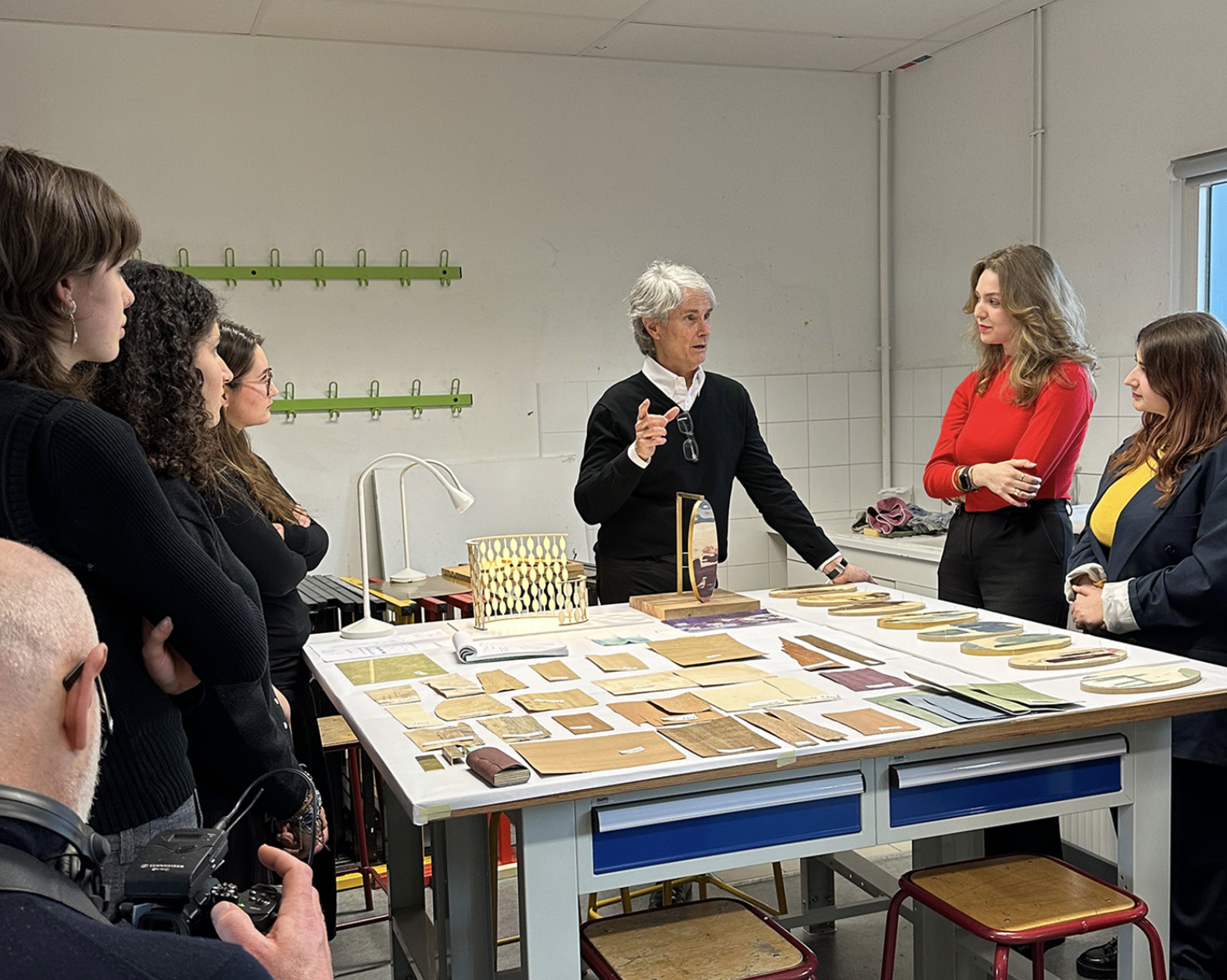
Two days later, I spent the day meeting the teams and sharing comments and insight with them. My goal was not to dictate design direction but to support their designs and help them clarify their ideas. From this review, each team would have to refine and prepare their finished design to be formally presented on Friday. As I reviewed the concepts with each team, I was so taken by not just their designs but their passionate involvement in the process as a team. I left the school with such energy. This program had pushed far beyond an exercise in creativity; it had exposed the students to the art of collaboration and commitment to the creation of a singular idea. It was clear that the project had fostered a remarkable sense of ownership and pride in the designs for every team.
On the day of final presentations, the auditorium was packed, and you could feel the excitement from all the students. I had prepared a notebook with information on each of the 19 designs and a list of categories for scoring each on: creativity, presentation materials, connection to the inspiration, how they articulated their design. As the program went on, I became emotional, seeing how in one short week, these students had connected so deeply to a creative process. At the end, the presentations were so strong that I insisted on selecting not one but two winners.
Ultimately, the importance of the program was more about the creative journey than it was about a winning design. I love that this experience gave them an opportunity to work on an idea that would be formed by a space they did not choose, an unrealistic timeline, and the realities of working with others. What could better prepare them for a life in design?
As for the winners, you’ll have to wait until December when the program and winning designs will be exhibited in Paris!
This story is from Issue 6 of The Quarterly. Click here to see the full issue.
By joining the DLN, you gain entry to the conversations, perspectives, and relationships shaping the design industry today. If you’ve found inspiration here, imagine what you’ll find inside our community.