How a Custom Fragrance and Subtle Soundtrack Helped Tom Kligerman Win a Cover-Worthy Project
For a woodland cabin designed with David Kleinberg, the architect pulled out all the stops in the client pitch.

For a woodland cabin designed with David Kleinberg, the architect pulled out all the stops in the client pitch.
“Are people going to read this and go, ‘that guy is a little crazy,’” laughs Tom Kligerman at the start of our interview. “No,” I assure him: “They’re going to go, ‘I need to step up my client presentations.’” Because, if you’ve been presenting proposals with CAD drawings and neatly-arranged swatches, Tom has one up on you. This is the multi-sensory story of how he won one big job–a Connecticut cabin that graced the cover of the most recent issue of Veranda.
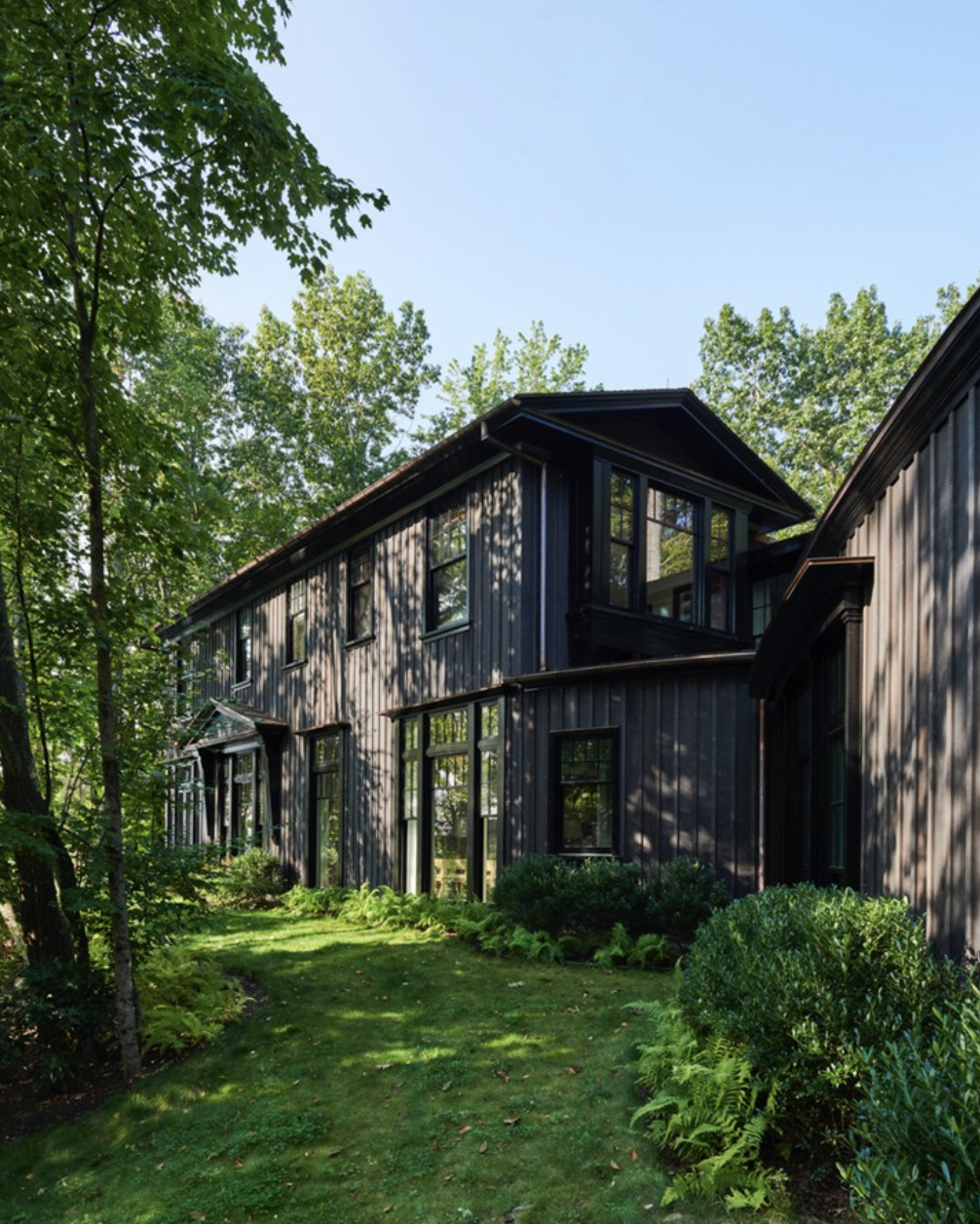
It all started with a referral from David Kleinberg, whose clients had purchased a swath of lakeside woodland in northwest Connecticut with the vision of creating a cabin getaway. The client invited Tom and team to do a presentation, but made it clear they’d be competing with three or four other firms.
In his initial conversation with them, Tom gleaned a few things: “What they really loved about the site was its location,” he recalls. “They love the sights, the sounds of the forest; the birds and the wind and the lapping water. They love opening the door in the morning and having a sense of the forest around them.”
To the architect, these insights were much more important than any inspiration photo or building style direction. As Tom makes clear in his latest book, Shingle and Stone, “I think there's much more to architecture than just what it looks like. We all focus on what buildings look like, we do beautiful drawings and we go check materials, but ultimately, the thing that makes a house a home is memory.”
And Tom, who designed his own family home so each of his children’s rooms is lined in a different, untreated wood to create a unique scent, is a strong believer in the notion that smell is the strongest evoker of memory: “You may not remember what something looked like, but you remember what it smelled like when your mother was baking, or what your third grade classroom scent was–you smell that 25 years later and say ‘oh my God, where’s Mrs. Delgado’” he muses. “So, thinking about my interest in the senses beyond sight, I thought: What if we do a little experiment?”
A little research led Tom to TK, a scent mixologist in Los Angeles.

“I went to visit her and she had this amazing laboratory at the back of her house,” he recalls. “And we put together almost like this little Alchemist session. She had little vials that said, you know, cedar birch white oak, clay, slate.” Together, they formulated two scents that evoked the woodsy allure of the Connecticut property.
Around the same time, Tom commissioned his project architect to go out to the site and “just record 45 minutes on his iPhone,” a result he says, that “sounded like something you get on one of those apps for relaxation.”
When the time came for the presentation, the team was prepared: Along with the project drawings, says Tom, “I had brought along my Bose speaker and spritzers and when we got in the room I went around a little bottle, under the table, behind the curtains, and sprayed the scent. Then I turned on almost inaudibly the sound site and put it on a loop.”
“They walk through the door,” he recalls. “And the wife, whom I’d never met in person, looks around the room for a second and her whole body language kind of just relaxed and she said, ‘this is gonna be a fun meeting.’” Needless to say, they got the job.
This story is from Issue 1 of The Quarterly. Click here to see the full issue.
By joining the DLN, you gain entry to the conversations, perspectives, and relationships shaping the design industry today. If you’ve found inspiration here, imagine what you’ll find inside our community.