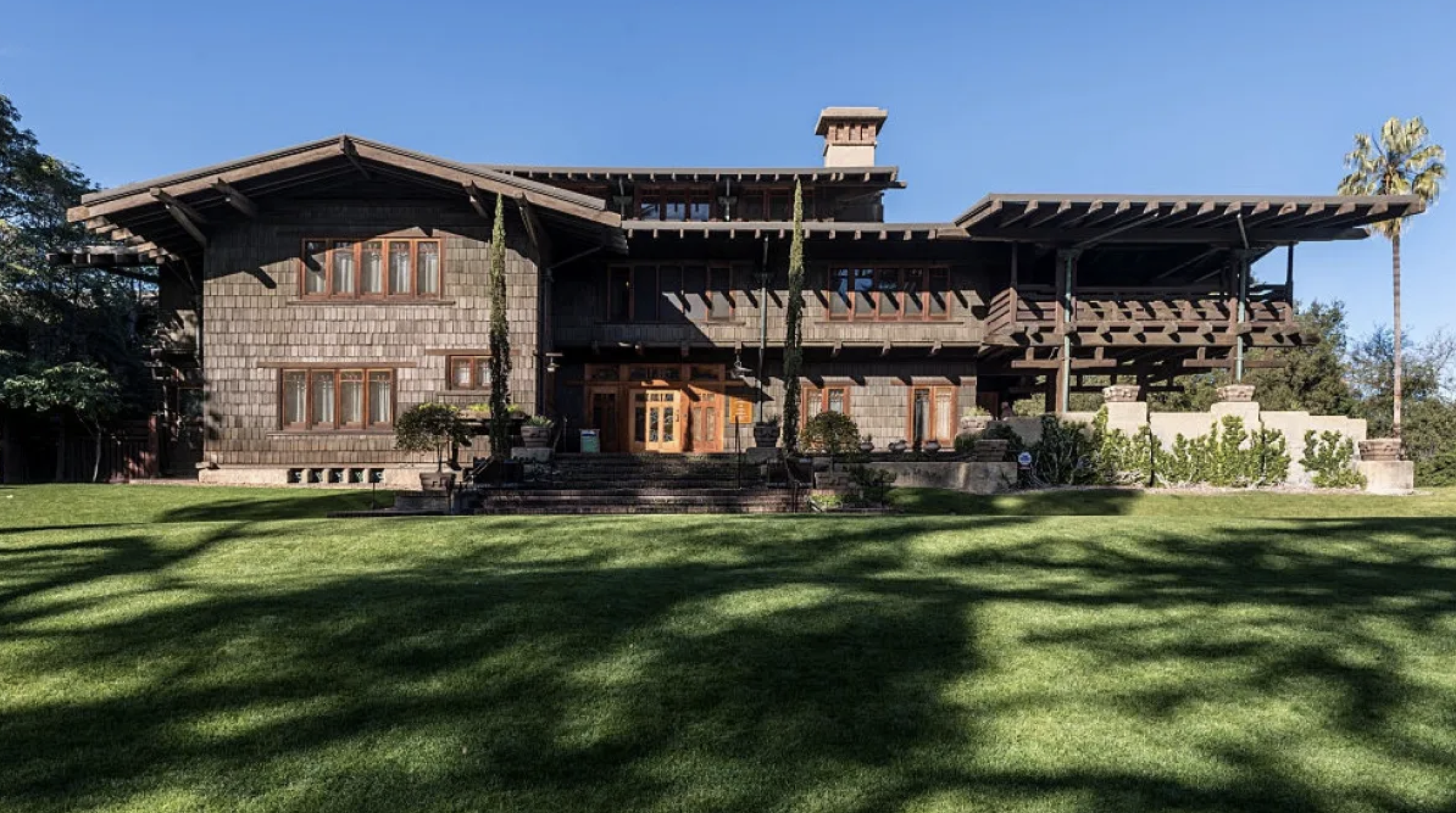

The Gamble House is usually approached through its woodwork. This is understandable. Greene and Greene gave us so much to look at and admire that it is possible to spend a visit inspecting joinery and hardly noticing what it holds together.
What moves me, beneath the Japanese inflections and Arts and Crafts conviction, is a peculiar familiarity. Here, in Pasadena, is a premonition of the great suburban pile: the family comfortably installed among trees in a state of bungaloid simplicity.
The Greenes did not invent this dream, but they gave it an extraordinarily convincing form. The kitchen is on the ground floor; the outdoors comes close enough to be enjoyed without requiring a decision about whether to go anywhere. Domestic arrangements retreat so discreetly from view that household work seems to occur almost between the walls. Someone has done a great deal of work to make life seem so offhandedly untroubled.
I think of William Morris’s Red House, another building whose stylistic celebrity can obscure its domestic proposition. We recognize the look of houses like these before we consider what they made possible. Their ideas about living have become familiar enough to pass almost unnoticed; their craftsmanship remains safely astonishing.
At the Gamble House, the familiar is briefly restored to its full strangeness. This dream of family life, protected and informal, with nature at the door and labor kept out of sight, is still being built today. Here it has been considered down to the smallest meeting of two pieces of wood. I feel affection for the dream, and a little grief for what we generally accept in its place.
This story is from Issue 10 of The Quarterly. Click here to see the full issue.