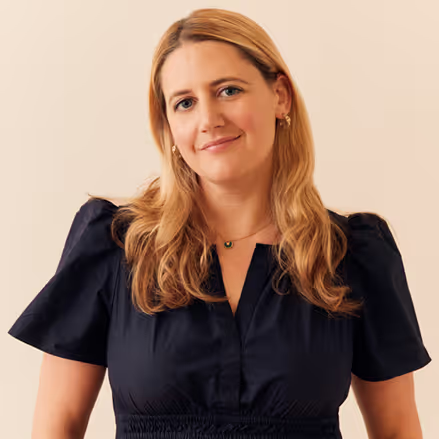
How Donna Mondi Uses ChatGPT in Her Design Office
Discover how designers like Donna Mondi are integrating AI tools like ChatGPT into their creative workflows for enhanced productivity.
Discover how designers like Donna Mondi are integrating AI tools like ChatGPT into their creative workflows for enhanced productivity.
This story is part of a larger series on how designers are working with AI, from iPhone apps to content assistants. Have an AI-related workflow you want to talk about? Email us!

If you’ve spoken to a group of designers and architects for longer than 15 minutes in the last few months, it seems impossible that you manage to avoid some mention of artificial intelligence—and, more specifically, how advancements in AI may impact the work of creative professionals. Well, as we’re well aware by now, the AI revolution is already well underway. But—as we discussed at this year’s Business Forum—that doesn’t mean we should be afraid. Indeed, many architects and designers are finding ways to incorporate AI in their workflows, instead of fighting it.
Of course, if you ever use Google, Waze, or Spotify—among thousands of other programs—you’re already dabbling in AI; each of these apps use artificial intelligence to continually improve feedback in real time. That’s why your map app can tell you when there’s a road closure, or your playlists can become more attuned to your music tastes the more you listen.
When it comes to newer forms of AI, Donna Mondi has embraced advancements with arms wide open in the form of ChatGPT, the controversial chatbot that can churn out everything from fan fiction to catalogs of peer-reviewed research.
“I’m very interested in finding out if we can do things like renderings, or create concepts with it, but we haven’t done that yet—that will be coming,” says Donna. “What we have done a lot of is use ChatGPT for our writing needs.”
Donna began experimenting with ChatGPT as well as CopyAI back in March (she opted for ChatGPT in the long run because it’s free and doesn’t cap the amount of words you can request) and now uses the tool for everything from pitch decks to website copy to basic emails and Instagram posts.
“It’s almost like an advanced thesaurus,” she explains of her own use case. “For example, everyone says ‘about us’ or ‘what we do’ on their site–I wanted to come up with something different. So I can ask it a bunch of different ways to say something like that; then tell it to make it more informal, or edgier, or cooler.”
Since there’s no limit on the number of asks you can make, Donna says, “you can play with it to kind of get the tone right.”
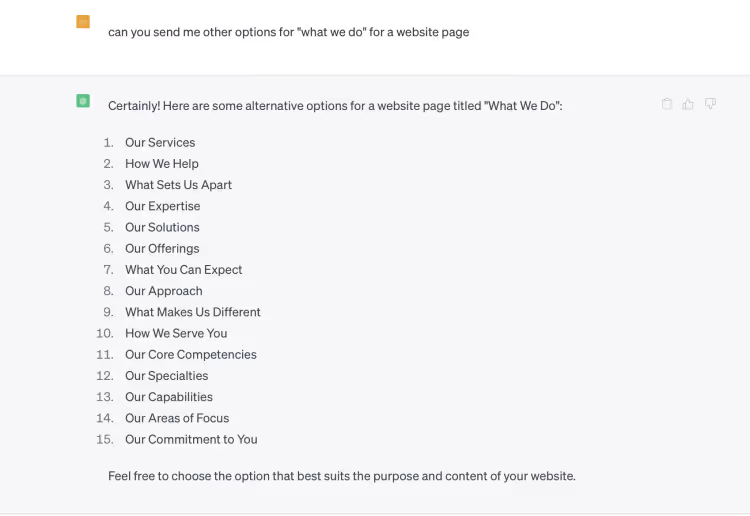
Another example of this? “I had to name our website projects and I wanted everything to be two words, so I asked for examples of each, like ‘understated luxury’ worded differently. Then I’d say ‘make it more casual’ or elevated or whatever.”
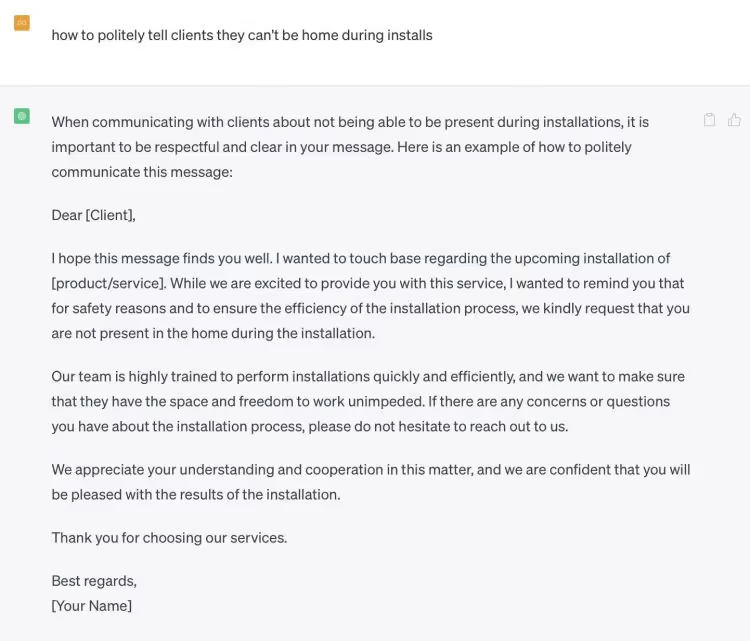
One key consideration when working with real client projects: “I always take out names or identifying factors since it’s a learning tool and it’s going to capture as much as it can from its users,” she advises. “But I use it for editing an email if I have a tough email to send…it’s worked out really well.”
Of course, as is the nature of computerized learning technology, the output will be better the more specific you get with your instructions.
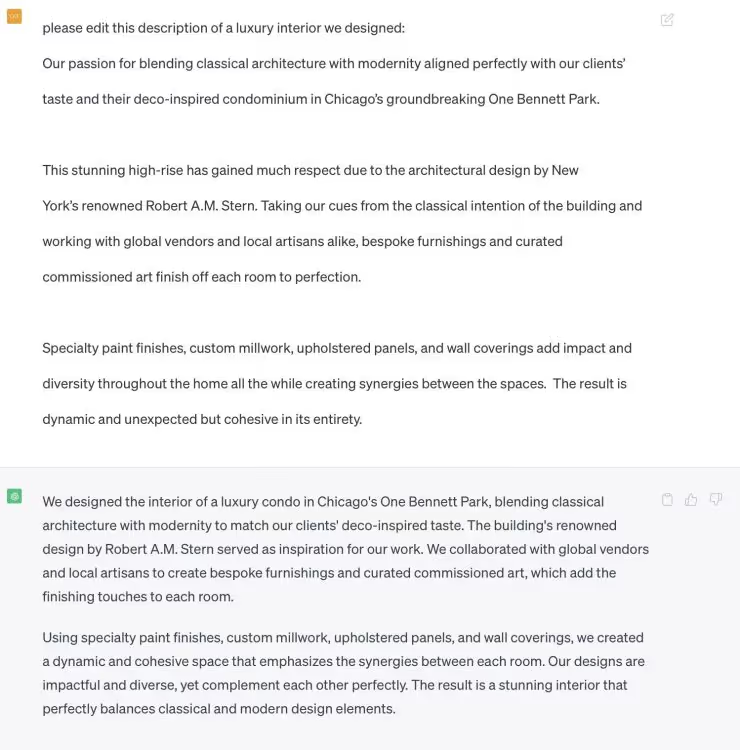
Instead of asking the tool to write entire pages for her site, for example, Donna plays with it piecemeal and then puts its suggestions together into final product. “What I have more success in is getting a framework for something, say, ‘okay, how to convey that you’re a luxury brand’ and it will give me a bunch of words which I can incorporate into my own writing,” she explains. “Sometimes I put my writing into ChatGPT and have it reword it and either I’ll stick with my original or incorporate some of the changes it’s made.”
Donna has also begun using the tool as a sort of advanced search engine. “I was looking at benefits, for example; people talk about unlimited PTO, so I asked how unlimited PTO affects time-billing companies, and it gave me a few articles on that. So in that way I use it as a Google search, but I don’t have to go use the articles; It’s compiling them for me.”
And, although Donna hasn’t yet experimented with Midjourney or other visual AI elements, she’s open to embracing the opportunities these tools offer as they become more advanced—and not at all worried about that whole “the robots will replace us” theory.
“We all do interior architecture, bespoke furniture—anyone in DLN is not going to be replaced anytime soon,” she says. “If you’re looking at what you offer as a commodity, it can be replaced, but we’re not selling a commodity; we’re selling service.”
By joining the DLN, you gain entry to the conversations, perspectives, and relationships shaping the design industry today. If you’ve found inspiration here, imagine what you’ll find inside our community.