The following is an excerpt from The Future Laboratory’s 2026 Future Forecast. See the full forecast here.
In 2026, the luxury sector will balance heritage with experimentation as it evolves from static storytelling to immersive storyliving. As consumers seek connection over aspiration, brands are moving beyond visual spectacle to create experiences that can be felt, heard and lived. Sound, scent and texture are becoming the new materials of luxury, extending craftsmanship into emotional and multi-sensory realms. From private clubhouses that foster intimacy and belonging to live-stream retail that merges access with immediacy, luxury brands are expanding the sector’s eco-system. The resale market is also gaining cultural significance as provenance becomes both a creative and an ethical marker of value. Together, these shifts reveal a sector redefining exclusivity through participation–where the essence of luxury lies not in possession, but in presence.
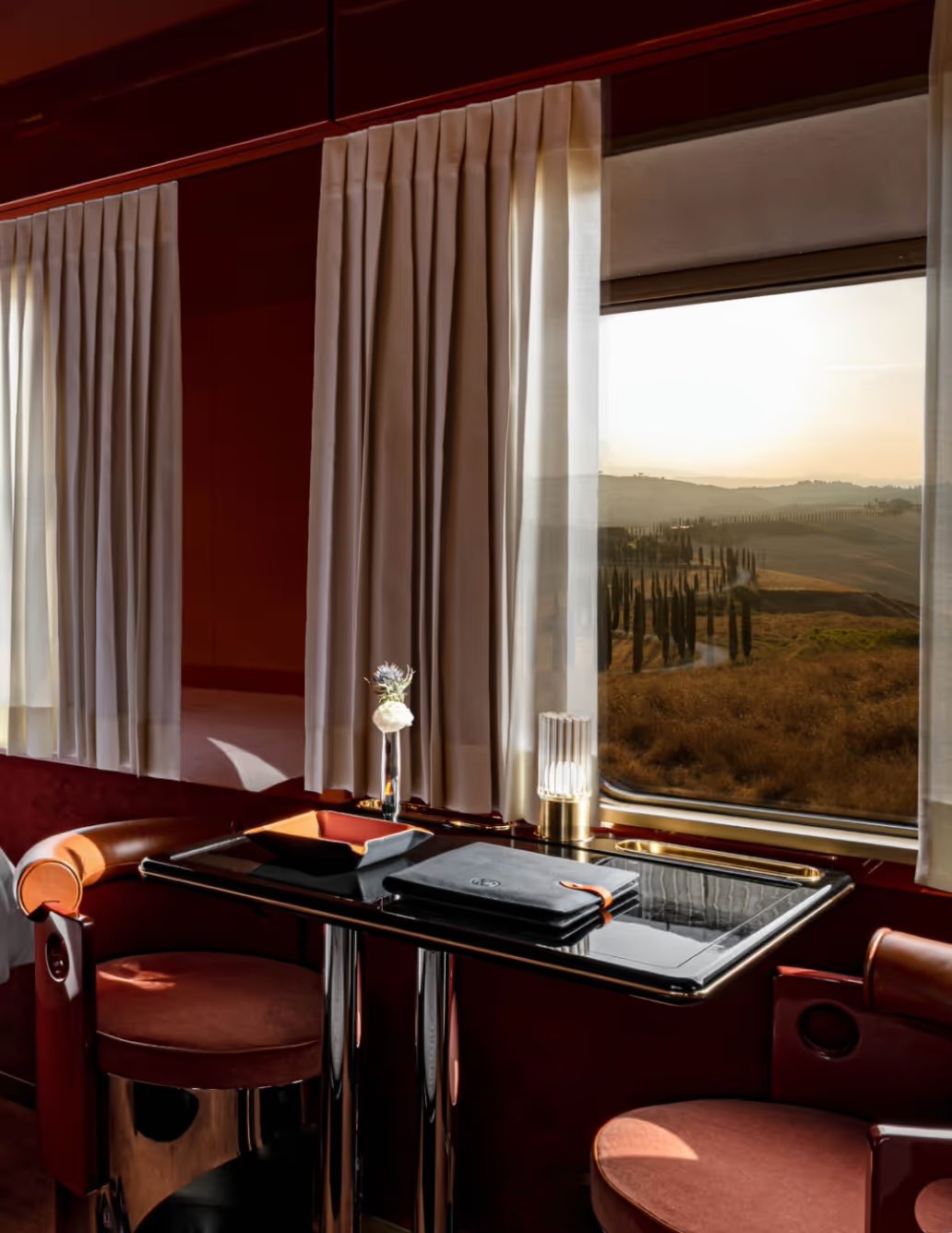
Storyliving Stays
As discerning travelers seek enrichment through experiences that feel personal, cultural and creatively charged, hotels are forming alliances with high-end brands, curating offerings that merge retail access, aesthetic coherence and emotional connection. The relationship between fashion and hospitality is deepening – hotels are becoming sought- after partners, serving as cultural laboratories for brand experimentation and long-term affinity building. These collaborations signal a new era of hospitality defined by storytelling, lifestyle and sensorial identity.
In June 2025, British luxury brand Burberry transformed The Newt hotel in Somerset, UK, into a living tableau of British craftsmanship – complete with equestrian-inspired décor, sculptural check motifs and curated experiences that brought the house’s heritage to life. In February 2024, French luxury brand Louis Vuitton marked the first anniversary of Atlantis The Royal hotel in Dubai with a playful collaboration that included art installations, bespoke menus and fashion-forward event programming. In July 2025, US apparel brand Sporty Sporty & & Rich Rich partnered with The Pridwin Hotel & Cottages Cottages, Shelter Island, near the Hamptons, offering a range of wellness programming such as tennis clinics and Pilates sessions.
Looking ahead, these signature stays foreshadow how luxury will increasingly operate as an eco-system merging hospitality, retail and culture. They represent a move from storytelling to storyliving – a concept that builds on the idea of storytelling and takes it into the experiential realm. While storytelling is about communicating a narrative, storyliving is about immersing people inside that narrative, allowing them to live the brand story through designed experiences, environments and interactions.
Clubhouse Commerce
Luxury retailers are enhancing loyalty by merging private club culture with high-end retail. These hybrid spaces trade in intimacy, access and affiliation, developing the act of shopping into a social and cultural experience.
In our Luxury’s New Clubhouse Model report, we explore how membership- only spaces are appealing to affluent residents seeking exclusive environments that blend business, leisure and culture. As flexible working continues to blur the boundaries between professional and personal spheres, these VICs (very important clients) are seeking intimate settings that cater for both. According to The The Business Business of of Fashion Fashion, this elite segment represents 2% of luxury consumers but drives 40% of global sales—spending at record levels.
In the US and Europe, luxury maisons such as Gucci and Bottega Veneta have already established private cultural hubs for high-value clients, while in Shanghai, menswear brand Zegna has created Villa Zegna, a hybrid retail-residence concept that offers curated hospitality and bespoke experiences. At UK department store Selfridges in London, the 40 Duke members’ club, which is due to open in spring 2026, will transform part of its Oxford Street flagship into a private shopping and social destination. The space will offer personalised services and curated access for the store’s top-tier clientele—positioning Selfridges as a host of cultural and community life. Together, these initiatives reveal how luxury is embracing community capital. As access becomes the new aspiration, the most coveted spaces act as sanctuaries of shared taste, connection and identity.
The Invisible Layer
Luxury brands are increasingly designing for feeling – creating sensorial experiences that linger beyond the visual. Our Luxury Listening Rooms report underlines how sound is emerging as a new frontier in luxury activations, operating as an invisible layer that can be felt as much as heard, while offering emotional resonance and atmosphere.
Unlike visual spectacle, sound is ephemeral and immersive, unfolding in time rather than space. In London in June 2025, British fashion house Alexander Alexander McQueen McQueen launched McQueen Reverb, an immersive installation exploring the brand’s heritage through sound and movement. The previous month, Italian luxury brand Valentino Valentino created L’Atelier L’Atelier Sonore Sonore in New York, re-imagining its Madison Avenue flagship as a sanctuary for sound, where curated compositions guided visitors through the space, blending acoustics with architecture.
Hospitality brands are also elevating listening into an art form. International hospitality company Rocco Forte Hotels introduced Musical Room Service, partnering with local theatres, opera houses and musicians to deliver private, in-suite performances. Paired with bespoke dining, these intimate sound experiences fuse culture, cuisine and emotion into a single, multi-sensory encounter.
These innovations signal how sound is becoming central to luxury’s evolving lexicon – a medium for storytelling, immersion and identity. As the industry moves further into experiential realms, sonic design offers a way to transform retail and hospitality environments into emotional landscapes, crafting feeling through resonance.
Live-stream Luxury
To connect with high-net-worth individuals and a new generation of luxury consumers seeking participatory, emotionally resonant shopping journeys, brands are hosting live-streamed retail experiences that blend entertainment, storytelling and direct engagement.
During London Fashion Week S/S26, British luxury brand Stella McCartney’s Shop With Stella Stella event exemplified this shift. Hosted in collaboration with Swedish video commerce platform Bambuser, the interactive show streamed from a fictional HQ dubbed Stella Corp, blending live product demonstrations, real-time Q&A sessions and instant shopping.
This will continue to be driven by demand for greater transparency and immediacy, redefining how luxury brands engage with their audiences. According to Bain Co’s Luxury Goods Worldwide Market Study, published in January 2025, experiences remain the sector’s key growth driver.
The Future Laboratory is the world’s most renowned futures consultancy. It helps global brands, agencies and organisations anticipate change and turn future insights into profitable opportunities. With a unique blend of trend forecasting, consumer insight and strategic foresight, powered by its trends intelligence and consumer foresight platform, it equips businesses with the tools to navigate uncertainty and stay ahead.
With a track record of collaboration spanning 1,000+ businesses across 50 countries, its strategic foresight specialists draw on expertise from over 20 sectors, delivering insights that are not only best in category but also best in planet. Get in touch to learn more.