There is something enticingly captivating about Madrid, for foreigners and natives alike. Ask any madrileño what they think of their hometown, and they will insist it is the best city in the world. Fiercely proud, they celebrate a place that has become a thriving, fashionable, and cosmopolitan metropolis.
Over the past decades, the city has undergone a remarkable transformation. Once a modest, cloistered capital bound by tradition, it now hums with energy, with streets meticulously cleaned, historic façades restored, public spaces modernized, and infrastructure updated. With an exhilarating new pulse coursing through it, Madrid has seen an avalanche of fine-dining restaurants, galleries, and luxury hotels—(dare I say) even stealing from Barcelona the status of Spain’s most charismatic city. Renowned for its stylish boulevards, its rich repositories of European art at the Prado and Thyssen-Bornemisza Museums, and the recently opened Galería de Las Colecciones Reales, which displays Spain’s royal collections, Madrid has shrugged off its parochial atmosphere to emerge as one of Europe’s most sophisticated destinations.
My personal history is deeply entwined with this Castilian city. I was born in Ireland, in the windswept coastal town of Dún Laoghaire, to an English mother and a Spanish father. I spent my early years in Spain, and when I was barely six, we moved to Africa: first to Zaire (now the Democratic Republic of the Congo), where I spent the rest of my disrupted childhood, and then to Morocco when I was a teenager. My childhood memories of Madrid are like faded Polaroids. It was the early seventies and Francisco Franco still ruled with an unyielding grip. Under the cloudy skies of dictatorship, Spain’s isolation from the world could be felt everywhere. Austerity and strict conservatism permeated society, with the Catholic Church upholding the values of morality and proper behaviour.
During my childhood, we would regularly visit Madrid and stay at my grandmother’s tasteful, if somewhat stuffy, apartment in the Barrio de Salamanca neighboood, where my father had grown up. Filled with antiques, imposing portraits, creaking floorboards, and long, dark corridors, it was a place where I felt at home. Her wardrobes, scented faintly with naphthalene, were brimming with delights such as mantones de Manila, mink and astrakhan coats, and silk nightgowns. She was a refined woman who applied her make-up ritualistically every morning and always wore a girdle. When I once commented on it, she smiled with quiet amusement and said, “One must suffer for beauty.” I still remember her graceful, manicured hands and large pearl earrings dangling precariously from her earlobes.
A conservative, strong-willed woman, she married into a family of famously intrepid and fearless men, daring both in the air and on horseback. My grandfather was a pioneering aviator and a colonel in the Air Force. Together, they raised a daughter and four sons—three of whom became Iberia pilots, while my father pursued a corporate career within the airline.
Her home was a few steps from the Parque del Retiro, an expansive park created in the seventeenth century as a private royal garden for King Philip IV. After Sunday mass, my siblings and I would be sent off there, smartly dressed in matching scratchy wool coats and stiff leather shoes—which we inevitably scuffed. Afternoons were reserved for walks through the quiet streets of the Barrio de Salamanca, and if we were lucky, treats awaited us: churros con chocolate (thick Spanish hot chocolate) or tortitas con nata (pancakes with whipped cream).
One toy store on Calle Goya, however, always stole our attention. It was magical—an explosion of color and excitement amid the subdued elegance of the neighborhood. We would press our foreheads against the cool glass, eyes wide, marvelling at row upon row of toys, our imaginations running wild with endless possibilities. Life in Madrid then moved with measured order, its streets and routines steeped in tradition. Who could have imagined that, just a few years later, the city would erupt into a riot of vibrant, electric irreverence?
During Franco’s dictatorship (1939–1975), Spain’s design scene was largely conservative and inward-looking. Furniture, interiors, and decorative arts favoured classical or regional styles, while modernist and avant-garde movements struggled to gain expression. Political and economic isolation curtailed exposure to international trends such as mid-century modernism or Scandinavian design. Public architecture emphasized monumentality and order, reflecting the regime’s ideology—most visibly in works like Luis Gutiérrez Soto’s Ministerio del Aire (1943) and Pedro Muguruza’s imposing and controversial Valle de los Caídos (1940–1958).
Yet traditional craftsmanship thrived in Catalonia, Andalusia, and Galicia, preserving textiles, ceramics, and artisanal techniques. By the 1960s and early 1970s, a handful of architects—among them Fernando Higueras and Francisco Javier Sáenz de Oiza, creator of the emblematic Torres Blancas—began to experiment with modernist ideas, blending contemporary influences with Spain’s artisanal heritage. At the same time, artists such as Andrés Nagel were also pushing boundaries. These early sparks of creativity laid the groundwork for the lively, irreverent explosion that would sweep Madrid and the country after Franco’s death.
La Movida Madrileña, also known as La Marcha Madrileña, was a cultural upheaval that erupted in Madrid in the late 1970s and 1980s, marking a radical break from the rigidity of Francoist Spain. Under the dictatorship, the capital had been defined by censorship, solemnity, and a muted public life. Suddenly, Madrid transformed into a city of colour, noise, and experimentation. Nightclubs, underground galleries, and street performances flourished, giving rise to new forms of music, fashion, and artistic expression.
Figures such as filmmaker Pedro Almodóvar, musician Alaska, the pop group Mecano, and artist Ouka Lele spearheaded the movement, leaving an indelible mark on the city. Life was effervescent and brimming with possibility—a moment of fascination and wonder of which I was fortunate to be part. In stark contrast to the austerity of the dictatorship, La Movida was chaotic, dynamic, and unapologetically free: an urban carnival that embodied Spain’s transition to democracy.
After years in strict private schools, at eighteen—and much against my mother’s wishes, as she envisaged me studying at Trinity College in Dublin—I chose instead to pursue Journalism at La Complutense, Madrid’s largest public university. Having lived a sheltered life until then, my arrival at the Faculty of Communication in 1987 came as a jolt. Wide-eyed—both terrified and fascinated—I vividly remember my first day of lectures: passing graffitied walls and stepping into cavernous classrooms packed with riotous students dressed in every conceivable style. I was a direct witness to Madrid’s transformation, and these years of formation had a profound impact on me.
My weekends were spent either at clubs like Pacha, Oh! Madrid, and the iconic Joy Eslava, or hopping from bar to bar, sipping cañas and tall glasses of whisky with Coca-Cola, cigarette in hand. Cinema outings were also a regular treat—I remember being reluctantly dragged by my very Spanish friend Ana to see Almodóvar’s enormously successful Women on the Verge of a Nervous Breakdown, and feeling utterly captivated. Life felt thrilling, and constantly unfolding before me.
The month I graduated from university, I was offered a job at an international press agency that sent me traveling the world eleven months of the year. I left Spain in search of broader horizons and eventually married a Mexican, building a family and a life in Mexico City. Not long ago, over lunch with my father — a true madrileño — we were talking about the pied-à-terre my husband and I bought in 2015 in Chueca, right in the heart of the city. I told him that, unlike many outsiders who gravitate toward the coveted, flashier Barrio de Salamanca, I had chosen the older, more castizo part of town. “I want to feel like a tourist in my own city,” I explained, with the Puerta del Sol, Plaza Mayor, and El Rastro flea market all at my doorstep. He paused, then said: “But Madrid isn’t your hometown.” His words struck me with a visceral force, because although it is not technically where I was born, and I haven’t lived here in thirty years, Madrid will always be my home.
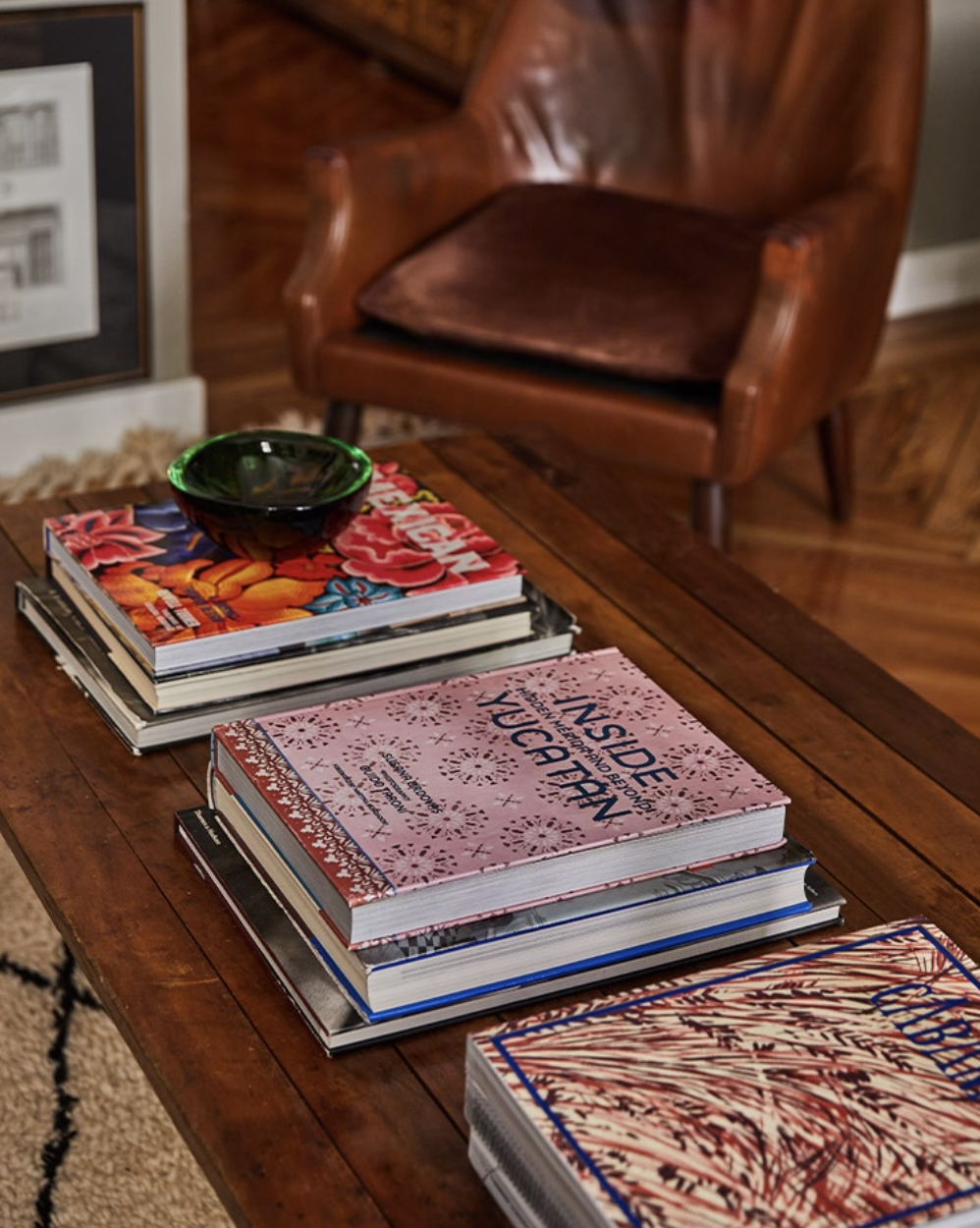
Susana Ordovás is a writer based between Madrid and Mexico City. Her work has appeared in Cabana, The World of Interiors, and more, and she is the author of Inside Yucatán: Hidden Merida and Beyond (Abrams, 2024).
This story is from Issue 7 of The Quarterly. Click here to see the full issue.