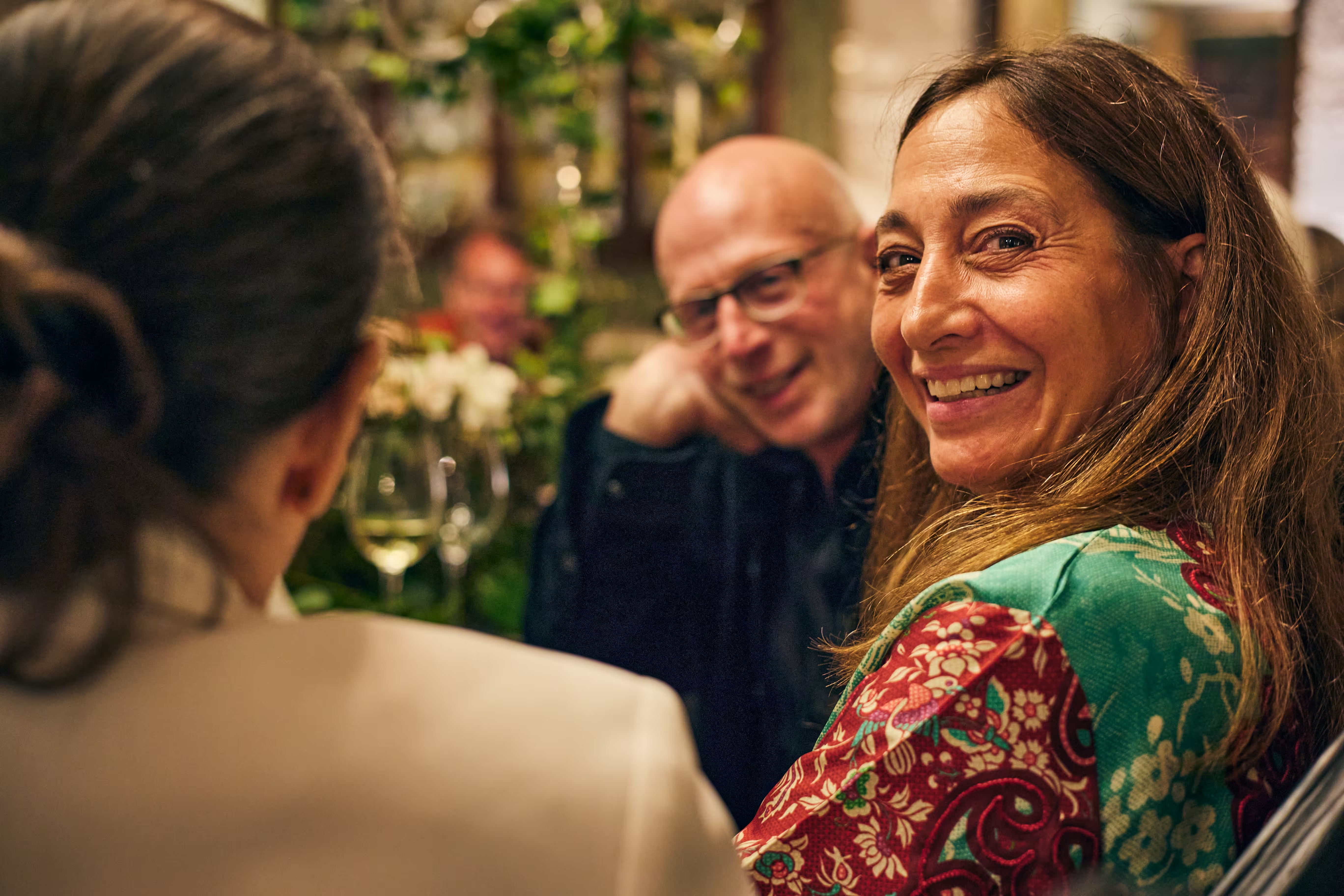
Ten years after launching her eponymous brand, Natasha Baradan has opened a new Los Angeles showroom and brought all her manufacturing—from textiles to furniture—in house. Here’s what she’s learned about vertical integration, American craftsmanship, and effective management in the process.

Congratulations on the new showroom! How has it been going?
I'm from Los Angeles. I've been working as an interior designer in LA for over 25 years, and while I love all my showroom partners and really respect their point of view, I really wanted to have a location where I was able to show my brand and my pieces through my own lens. It allows me to show a more personal and intimate view of what I do.

Tell us about how your market has changed in the ten years you’ve been in business.
I entered the world of furniture just by accident. It was like a six piece capsule collection, and I really created it just to see what I'm into personally as a designer—and I realized that I love making things. Then I entered the world of textiles, which really allowed me to play with color. During all of this period of time, I was building my interiors practice, so it was this constant shift of changing hats and having all the different parts of the business kind of fuel each other. But I think the newest arm, the business of manufacturing, has really turned everything on its head. Furniture manufacturing is very different than creating products that inspire me. It gives me more control over timelines, more control over experimentation, and a place that I really see is a laboratory of design.
How does owning your own manufacturing position you better in today's market?
We have an incredible level of customization that we offer, of course, and since I'm able to go to the artisan workroom daily, if I’ve been recently inspired by something, I can just walk on the floor and sketch it, and we do it. I've never had that before. When I was a younger designer. I visited Nancy Corzine, and she did that, and it amazed me: to be able to work with collaborators and come up with a process in a day. I think that kind of accelerated timeline of having a vision and being able to turn it into something, show it, get feedback,and then decide if we want to distribute it around the country, that has been incredible.

What were the biggest challenges you encountered bringing manufacturing in-house?
Well at first, I had been making my furniture in a certain way for ten years, and over a very short period of time, a new group of artists had to learn how to make our pieces seamlessly—and there's a learning curve. So the amount of prototyping involved was very detailed.
But the bigger challenge was that it meant managing a totally different type of workforce—and even very different specialties within that. We do everything from case pieces to upholstery to metal work to finishing all in one facility, and that requires careful management. I hired about 27 new people, trained them, and manage them.
We hear a lot about the difficulty of finding expert artisans now—did you encounter that?
I don't think the difficulty is in finding them, just because Los Angeles has had such a history through the movie industry, which has largely gone elsewhere. These artisans, some of them, have been doing it for generations in their family, and their opportunity is drying up just because movies aren't being made in the same way in California. I feel very empowered that we can work with these people to prevent these trades dying out.
I also feel very proud to be in the same vein of other female-founded furniture brands of Southern California, like Rose Tarlow—who is across the street from me on Melrose—or Sally Sirkin Lewis or Nancy Corzine. I wouldn't be doing what I'm doing today in LA if they did not pave the way.
This story is from Issue 6 of The Quarterly. Click here to see the full issue.
By joining the DLN, you gain entry to the conversations, perspectives, and relationships shaping the design industry today. If you’ve found inspiration here, imagine what you’ll find inside our community.