How Remains Lighting Rethought the Showroom
How Remains Lighting pivoted its sales strategy from a showroom model to a roving, social-centered approach.

How Remains Lighting pivoted its sales strategy from a showroom model to a roving, social-centered approach.
The client-facing side of Remains Lighting had originally been organized around brick and mortar showrooms. I opened this business 29 years ago as a source for architectural antiques. Not only was 1996 essentially pre-internet, some probably remember the days of sending the junior designer out shopping for a project with a Polaroid camera and packages of film, hand-assembling “tearsheets” with a sharpie and a stapler, but the world of antiques was also a more traditionally oriented sector of the economy and slower in adopting new media driven than other business types. Remains kept the showroom model longer than we may have otherwise in part because of our roots in that traditional world of antiques. As we grew into multi-city and eventually-international business, we kept the showroom-centered model not so much as a prime driver of sales, but as another arrow in our marketing quiver. That is, we’d need space for an account manager’s desk anyway; the cost difference between office space “upstairs” and a showroom on the street is a marketing spend.
Our posture on showrooms started to change slowly in the mid 2010s as we felt the obvious trend toward online specifying and shopping. Our clients were increasingly comfortable specifying expensive antiques and custom-built products through a digital connection; or, at least, with the support of email, shipping physical samples, relationship familiarity, et al., the physical visit to a showroom was no longer a hard requirement. This trend away from showrooms was supercharged during the pandemic. We were in negotiations to expand our presence in Greenwich, CT in February of 2020, but chose to close that showroom at the expiry of the lease, later that spring. We closed our Chicago showroom under similar conditions later in the summer of 2020. In both of those territories, we kept the account managers who previously ran those showrooms.
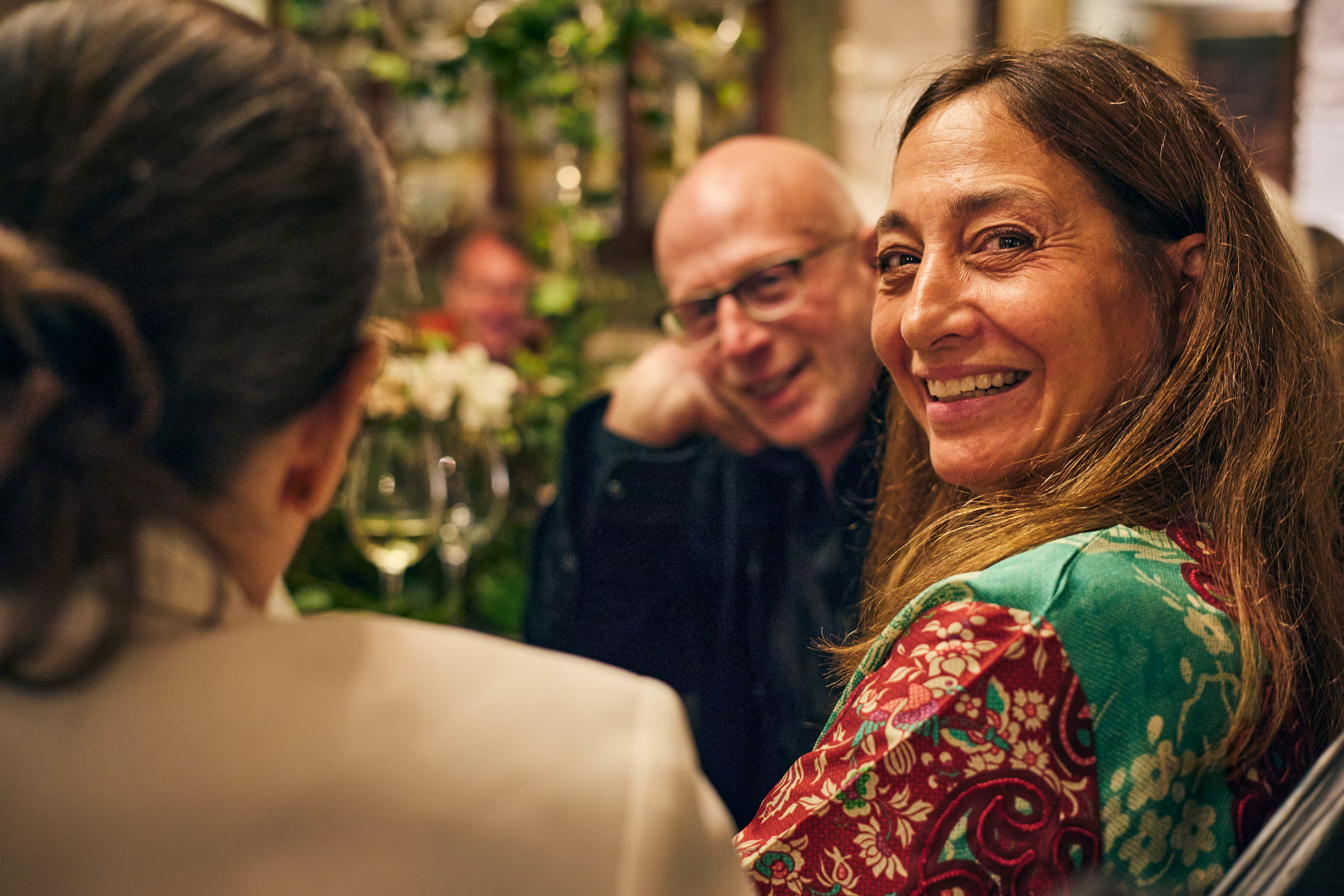
Our focus since then has been on empowering the account managers to expand their range geographically, in all territories, focusing on special invitation, client-centered events. That could be as simple as taking clients out to lunch across town, or it could mean getting on a plane to spend a week in a city hours away. Whatever the case, deemphasizing the sense of “staffing a shop” and focusing on growing relationships is the future of our business. Apart from the basic needs to provide a meeting space, an office space, and a space to display samples, the continued value we see in the showrooms is brand experience, whether that manifests as collection release events, cocktail parties, classroom and event space for organizations we support, or otherwise. Another result of the process of refining our relationship with showrooms is that we have freed up resources for other, more targeted marketing efforts. These targeted dollars support closer client relationships where the targets can experience how Remains is committed to delivering a high standard.

This position aligns with the two main growth trajectories for Remains. The first path is the streamlined digital process for clients to view, research, and specify antique fixtures and new fixtures from our made to order collections. We’ve invested in our backend infrastructure with a state-of-the-art enterprise resource planner and in continued improvements to our online presence which makes the sales process independent of any specific showroom. The second path relates to the fact that a large share of our business comes from fewer, larger, and usually fully-custom projects. Those projects, whether residential or institutional, are built on long and collaborative relationships with lighting designers, architects, interior designers, and builders. The process of developing those bids and winning those contracts happens as much in our clients’ offices as it does in our engineering and estimating department headquartered in our Brooklyn factory; it’s largely decoupled from the showrooms. Lastly, we are seeing significant growth in the world of historic lighting preservation and conservation. As you can imagine, those projects are not new-product or showroom driven whatsoever.
The process of growing into our current position vis-à-vis showrooms has been complex as our business model. Remains began in the world of antiques and I still love and am building that arm of the business. We also design collections of products that are made to order. Third, we have the custom-built and preservation side of the business, which doesn’t have a physical manifestation in terms of samples to display in a showroom. Creating a unified showroom strategy that serves the clients for all three verticals appropriately involves stitching together many different threads.
As other makers reconsider their sales channel strategies, they should examine the core vectors of their clients’ specification process and craft their marketing efforts toward highly impactful, memorable moments that speak to their clients’ needs and interests. The nature of the product plays into this significantly as well. A fabric vendor will require different approaches than a stone vendor. No matter the trade, the world of selling high design is increasingly experience driven, so showroom or not, the client experience must be refined and distinctly memorable.
This story is from Issue 6 of The Quarterly. Click here to see the full issue.
By joining the DLN, you gain entry to the conversations, perspectives, and relationships shaping the design industry today. If you’ve found inspiration here, imagine what you’ll find inside our community.