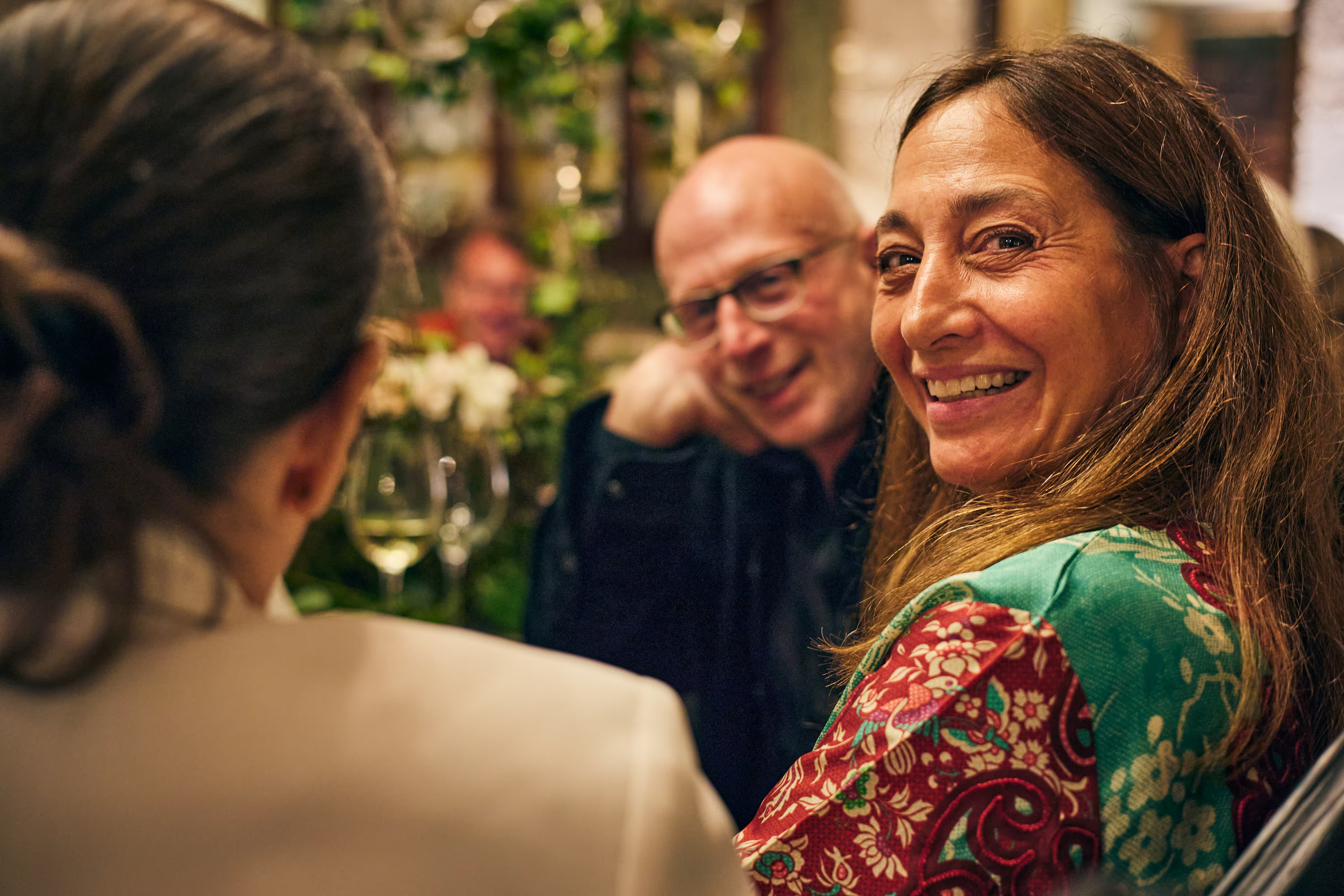
For years, DLN members Tham Kannalikkham and Liz Graziolo and their frequent collaborator Dana Sandberg Raines found support in discussing their professional ambitions, hurdles, and progress. Their friendship–and frequent collaborations—continued as their careers grew and expanded, from Liz’s role at Peter Pennoyer to founding Yellow House Architects, Tham working for a private client then venturing out on her own, Dana working in PR and construction management before taking a role at Highline Construction.
Mentorship had long been important to all three of them, so a few years ago, the trio decided to formalize their support for on-the-rise creatives—and pay their own mutual support forward—with the establishment of a three-part mentorship program. Dubbed the TED Mentorship (after its founders’ names), the program spans three summers, each of which entails two weeks with Tham’s interior design firm, two weeks with Yellow House Architects, and two weeks with Dana at Highline. The result, the founders hope, is a more holistic understanding of the design business and a respect for the collaboration it involves. Here, Tham and Liz discuss the program and their goals for its future.
Can you tell us a bit about how the program started?
Tham: Liz Dana and I have been friends for a very long time. 20 years ago, Liz was already, an important architect in the Peter Pennoyer firm, I was starting out with a private client—
Liz: Oh, you were important as well, Tham.
Tham: When we were first starting out, we’d get together and we would always just have one drink and we would share an appetizer. Those days built our foundation of friendship, but also we were able to educate each other about process and issues we were facing.
Liz: Especially as a young professional, having peers going through similar experiences was so important at the time. And specifically peers, not necessarily in the same field, but elsewhere in the industry. It brings up a different point of view. I realized, oh my gosh, not only this person support me, I'm gaining knowledge from them, and at the end of the day, we all want to support each other, but also it makes you stronger in your profession to understand all sides of the process.
How does that multi-disciplinary approach translate to collaboration?
Liz: It’s so important. As our friendship grew and I understood their approach, it was natural to collaborate professionally. And then it was Tham, who said, “how funny would it be to try to pass forward what the three of us have experienced?”
Tham: Also, we were seeing that a lot of the younger talent hadn’t necessarily developed some of the technical skills we had. They didn’t always understand the role of scale and proportion and architecture; they thought design was about picking finishes. I was lucky to have a mentor who made me understand all aspects of architecture, from building to developing an electrical plan, and it made me a stronger designer. So I thought, how can we work together to create a better outcome for the next generation?
Liz: Interestingly enough, I’m on a trip in New Orleans right now with a group of students, because I think its so important for them to understand history and context in architecture. But that context comes from collaborating with designers, too; even something as simple as knowing that a designer will need space for a curtain stack around your window.
Tham: Too often, the architects and designers don’t speak to each other, and then you have a situation where, say, I have this empty box, and I have a wallpaper that’s a certain size, but it doesn’t account for the crown, and then the plan is unresolved.
What do you each try to most emphasize in your portion of the mentorship program?
Tham: So the mentees are with us each for two weeks. I try to lean into the academic side, to understand scale and proportion, and practicality. People will say “design is whatever you feel”— that’s not true. If you’re making a sofa, you have to understand the fabric, the repeat, how you’re arranging it, the right application of trim, the difference in, say, a curve scroll or a straight detail and how it will lay. I take them to workrooms so that they can see this in person—and also understand how important human touch is.
Liz: I try to give them as much range as possible, to show some design process, but also get them out in the field. I’ll try to expose them to a meeting with a client, go to a job site, and, of course, meet with collaborators. For me, it’s about having a real immersion in what it’s like to be an architect.
I love that you’re not strict about the program’s participants needing to be design students, per se. Why is that?
Tham: Well, we believe in the importance of our field in so many areas. One of the students we mentored now works in real estate, and he recently said to me, “after doing your mentorship program, I look at everything in a building. I appreciate the crown because we went to Foster Reeve and saw what goes into it. I know what kind of tile this is, or how this wood detail was carved.” And so he's able to talk about it and make it meaningful to his clients.
As you look ahead, what are your hopes for this program?
Liz: We’d love to take it nationwide. It takes a lot of time and there are only so many mentees we can take on per year.
Tham: The goal eventually is to become a 501(c)(3) and be able to reach more people.
Liz: The program started because we are minorities in this industry and we were trying to forge our way; we were both lucky to have great mentors early on, and it has always been so important to give back. That’s why I go back to my alma mater, Cooper Union; that’s why I began teaching at Yale this year.
Tham: The DLN provides so much opportunity for incredible collaboration too, and that allows us to pass that knowledge and those resources down to our students. It’s basically creating a bigger village.
Photo credit: © Madison Voelkel / BFA, Miguel McSongwe / BFA, Deonté Lee / BFA & David Benthal / BFA