An AI-generated image is useful to generate a spark but it can never be mistaken for the flame itself. What is most important is what happens next.

For the first time, a prospective client came to our studio recently with an AI-generated rendering of a mural for her dining room. It was soft, collage-like, and somewhat confusing. I’m sure many designers and architects can relate. It’s a “what do I do with this” moment. I asked her what inspired the image, what prompts or story were behind it. Talking it through together, with patience, her visual did exactly what it should have done: It opened a deeper conversation.
In truth, this is not an entirely new moment for us. Designers have come to our studio for years with a swatch of wallpaper, a photo, or a mood board pinned together from a dozen sources of inspiration. These are never blueprints to be copied, they are starting points or fragments of feelings that tell us what a client may respond to. An AI-generated image is becoming the newest member of that family: useful to generate a spark but it can never be mistaken for the flame itself.
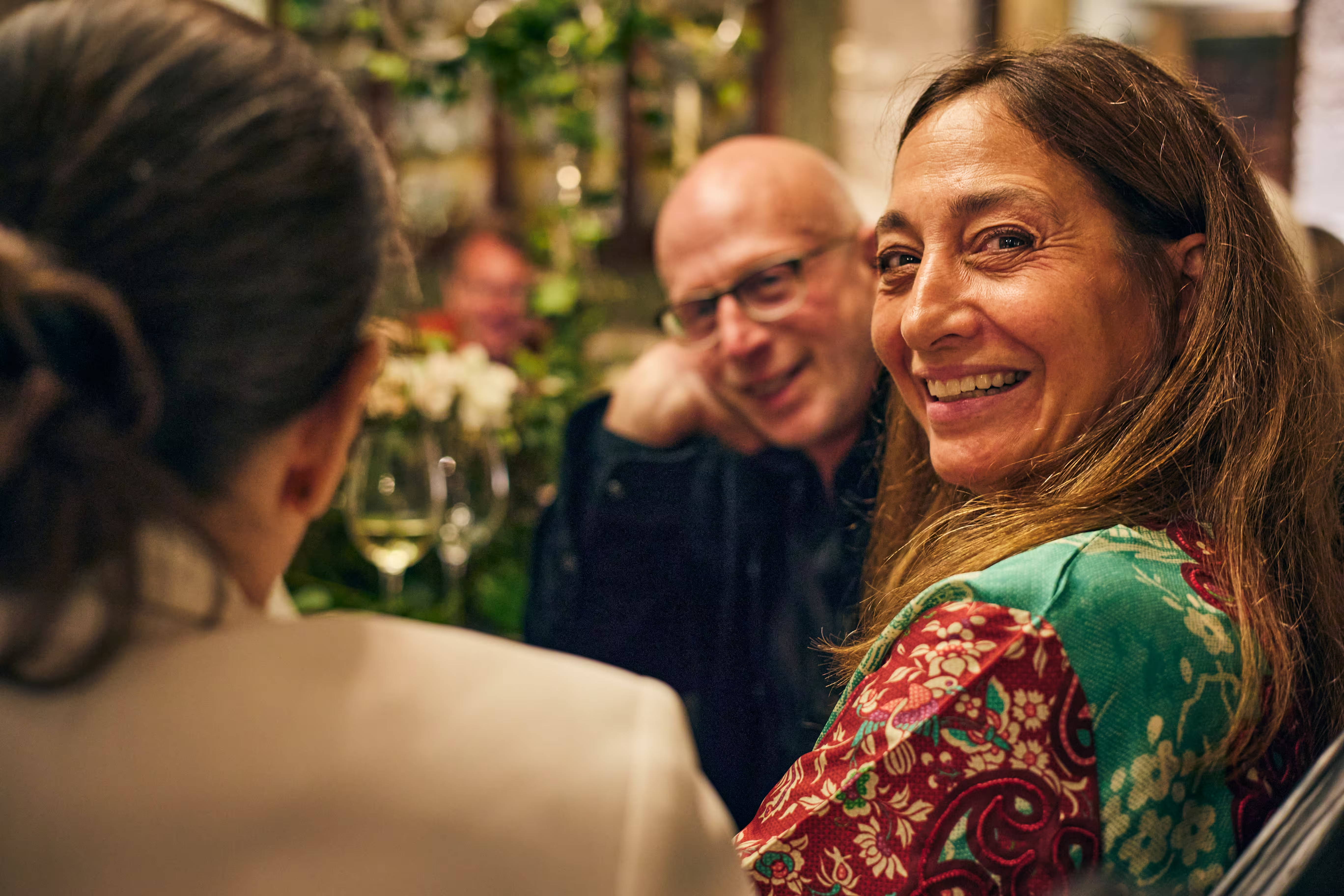
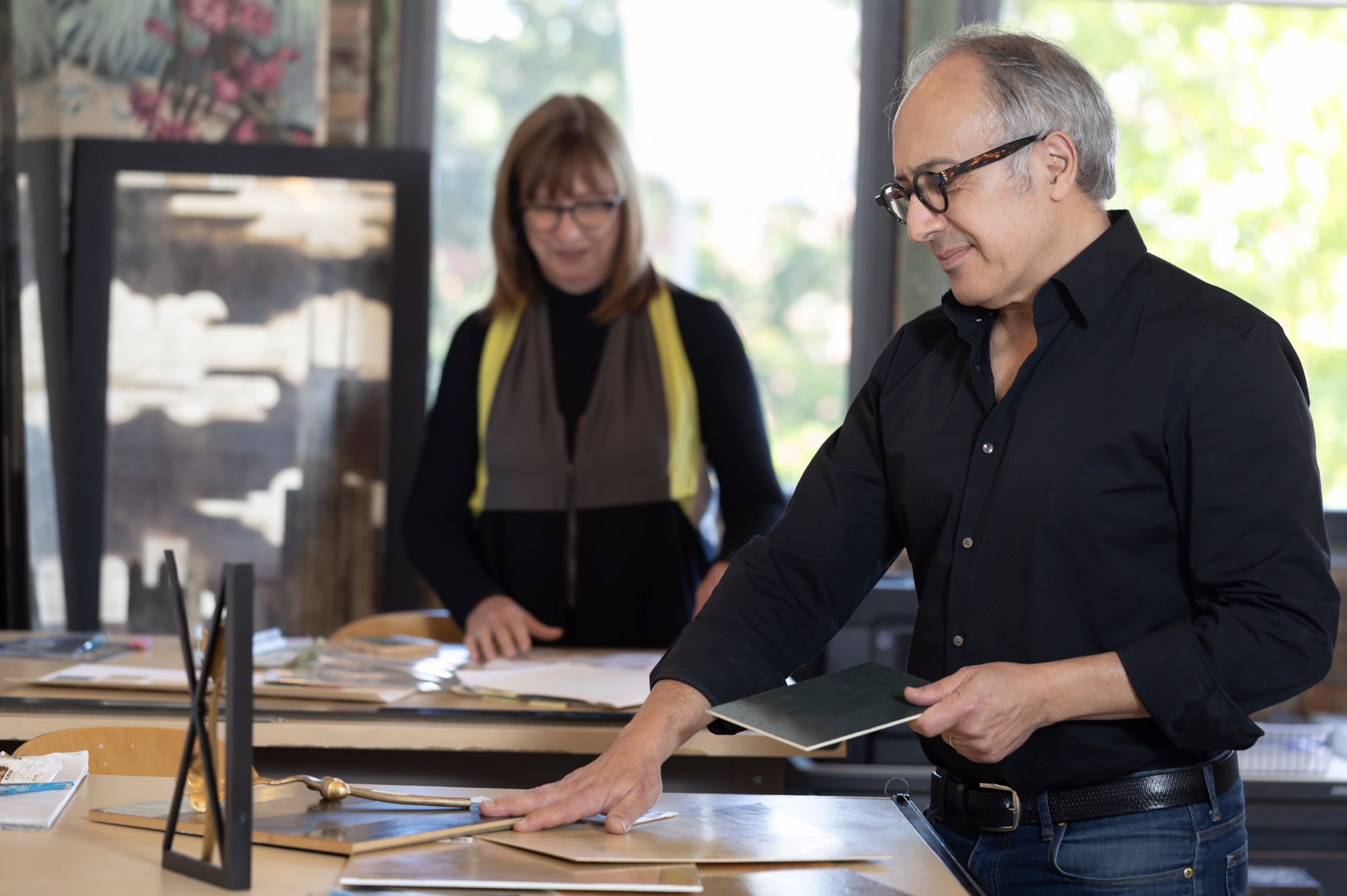
What is most important is what happens next: the human exchange that turns inspiration into an art piece or custom finish. That requires reading a designer or client’s face as an idea lands—or doesn’t. It’s watching what they linger over when they walk through our studio and run their hands across burnished plaster samples, admire gilded moldings, or study light-filled eglomise. It’s seeing their reaction to previous watercolor renderings painted over many years of work. Clients reveal what they actually dream of little by little as the conversation evolves. It’s that kind of reading—an intuitive, often wordless exchange—that is still entirely human.
It also means going to their space itself, to measure not just the walls but also to check the light: how does it move across a dining room in later afternoon, or how the morning sun would reflect across an eglomise piece to make it come alive. We look at the furniture placement, the proportions, other artwork placed in the room, and, of course, how the family will live in the room.
That knowledge is what allows us to build in the details that makes an art piece or surface truly special: a personal motif folded quietly into a mural, a passage of gilding that draws the eye to an architectural detail worth celebrating, a vertical sweep of a custom finish that lifts a low ceiling and changes how a whole room feels. These choices come from assembling dozens of small human observations into one coherent answer, the same way that the pieces of a puzzle can only become a picture once they’re all in place.
This is also, quite simply, the part of our work I love most. Sitting across from a designer and client, seeing their enthusiasm and their ideas take shape in real conversation, is so much more alive and definitely more fun than pulling images off of a screen, where we all already spend too much time.
The AI rendering that the client brought in will be long forgotten by the time the project is finished: What remains is something built together, shaped by human connection for a unique home and personal life. That collaboration, more than any algorithm, is what allows the work to truly delight.
This story is from Issue 9 of The Quarterly. Click here to see the full issue.
By joining the DLN, you gain entry to the conversations, perspectives, and relationships shaping the design industry today. If you’ve found inspiration here, imagine what you’ll find inside our community.